
A 500 kW factory on TNB's E2 tariff pays RM44,635 every month in capacity charges, before consuming a single unit of electricity. With BESS prices falling and GITA tax relief available until December 2026, peak shaving is now one of the highest-return investments on a factory's balance sheet. Could your facility be overpaying by tens of thousands every month?
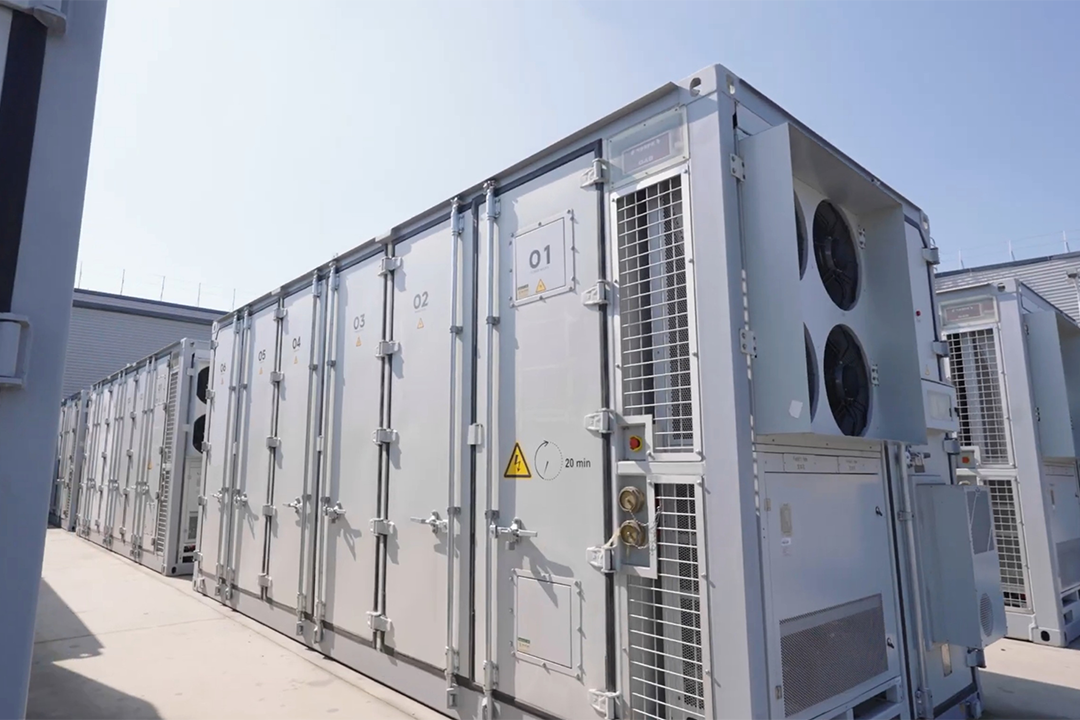
A factory on TNB's Tariff E2 (medium-voltage, Time-of-Use industrial) drawing a peak demand of 500 kW incurs RM44,635 per month in capacity charges alone, before a single kilowatt-hour of energy is consumed. A Battery Energy Storage System (BESS), sized and programmed to clip peak demand events, can reduce that charge by 60 to 80%, saving RM26,781 to RM35,708 per month from demand charges alone.
This article explains how those savings are achieved, what a BESS system costs in Malaysia in 2026, and how to assess whether a factory qualifies for a strong return on investment.
Under TNB's RP4 tariff structure (effective July 2025), the Capacity Charge is billed at RM89.27 per kW per month for E2 users. This charge is determined by the single highest 30-minute average demand recorded by TNB's smart meter during the billing month, not by average consumption, and not by how long the peak lasted.
A single operational event, a cold-store compressor restart, a shift changeover where all production lines start simultaneously, or an HVAC system cycling on after a brief outage, can set the maximum demand figure that locks in the Capacity Charge for the entire month.
For businesses on the E1 flat-rate tariff, the Capacity Charge is RM45.10/kW per month. For C1/C2 low-voltage commercial premises, it is RM30.30/kW per month. In all cases, reducing the recorded peak demand is the highest-leverage cost reduction available.
Peak shaving is the primary industrial application of BESS in Malaysia. The system stores energy during off-peak periods, when the grid tariff is lower and the meter records lower demand, and discharges automatically when site demand rises toward a pre-set threshold. The discharge reduces the net demand drawn from the grid at the critical 30-minute measurement window, lowering the peak figure recorded by TNB's meter.
• Without BESS: TNB records 500 kW; Capacity Charge =
• With BESS shaving 300 kW from the peak: TNB records 200 kW; Capacity Charge =
• Monthly saving:
Achieving 300 to 400 kW of peak shaving typically requires a BESS system with two hours of discharge capacity, i.e. 600 to 800 kWh of usable storage.
The Green Investment Tax Allowance (GITA) applies to qualifying BESS assets. Businesses can claim a 60% allowance on qualifying BESS capital expenditure, offset against 70% of statutory income. The GITA incentive period runs to 31 December 2026, giving businesses a defined deadline to file qualifying applications.
For a profitable business investing RM1.5 million in a BESS system, the GITA can reduce the effective post-tax cost substantially, improving the payback period from the unadjusted 5-to-7-year range to under 4 years in many cases.
At the national grid scale, the Energy Commission's MyBeST (Malaysia Battery Energy Storage System) programme has shortlisted four grid-scale projects totalling 400 MW/1,600 MWh for Peninsular Malaysia. One of the four contracts, a 100 MW/440 MWh project, was secured by HyperStrong, announced in May 2026. Malaysia's first large-scale battery storage system was inaugurated in Sabah, further demonstrating the growing maturity of the BESS market in Malaysia.
From January 2026, the Energy Commission also requires all new SELCO (self-consumption) solar installations exceeding 1 MWac to include BESS, confirming the technology's role as a standard component in large-scale industrial solar projects.
Shift-based manufacturers are the strongest candidates: demand spikes during shift changeovers are predictable, time-limited, and directly addressable by discharge scheduling. Cold-chain and logistics facilities with large compressor banks that cycle on together also benefit significantly. HVAC-heavy commercial properties, particularly those with large central chillers, follow the same pattern.
Factories with flat, stable, continuous loads gain proportionally less from peak shaving, as their maximum demand is close to their average demand. These facilities should model their specific demand profile carefully before committing capital to BESS.
Combining BESS with rooftop solar maximises savings on E2: solar generation during peak tariff hours (52.00 sen/kWh) reduces energy charges, while BESS discharges during demand spikes to reduce capacity charges. The two technologies address the two largest cost components of the RP4 bill simultaneously.
Facility managers who want to understand the savings potential for their specific load profile can request a peak-demand analysis from the i2 Energy team via the contact page.
How does battery storage reduce my TNB electricity bill in Malaysia?
A BESS discharges stored energy when site demand rises toward a peak threshold, reducing the maximum kW demand recorded by TNB's 30-minute interval meter. This lowers the Capacity Charge, billed at RM89.27/kW/month for E2 users, which is often the largest controllable item on a commercial electricity bill.
What size BESS do I need for a 500 kW factory in Malaysia?
To shave 300 to 400 kW from the recorded peak, a BESS sized for approximately 600 to 800 kWh of usable storage is typically required, providing around two hours of discharge at the target shaving rate. The exact size depends on the duration and shape of the demand spike, which a demand profiling analysis will reveal.
What is the payback period for a BESS system in Malaysia?
Most industrial BESS installations in Malaysia achieve full payback within 5 to 7 years from demand charge savings alone, before tax incentives. The GITA (60% allowance on qualifying BESS CAPEX) can shorten the post-tax payback period to under 4 years for profitable businesses, if the system is commissioned and the application filed before 31 December 2026.
Is there government support for battery storage installations in Malaysia?
Yes. The Green Investment Tax Allowance (GITA) provides a 60% allowance on qualifying BESS capital expenditure, offset against 70% of statutory income, and is available until 31 December 2026. The MyBeST programme also demonstrates national policy commitment to BESS at the grid scale, which is likely to support continued cost reductions in the technology.
What is the MyBeST programme in Malaysia?
MyBeST (Malaysia Battery Energy Storage System) is the Energy Commission's first competitive grid-scale BESS procurement programme. It targets 400 MW/1,600 MWh of grid-connected battery storage across four 100 MW/400 MWh projects in Peninsular Malaysia, to be commissioned by 2027.
•
•
•
•


Blogpost
A factory on TNB's Tariff E2 (medium-voltage, Time-of-Use industrial) drawing a peak demand of 500 kW incurs RM44,635 per month in capacity charges alone, before a single kilowatt-hour of energy is consumed. A Battery Energy Storage System (BESS), sized and programmed to clip peak demand events, can reduce that charge by 60 to 80%, saving RM26,781 to RM35,708 per month from demand charges alone.
This article explains how those savings are achieved, what a BESS system costs in Malaysia in 2026, and how to assess whether a factory qualifies for a strong return on investment.
Under TNB's RP4 tariff structure (effective July 2025), the Capacity Charge is billed at RM89.27 per kW per month for E2 users. This charge is determined by the single highest 30-minute average demand recorded by TNB's smart meter during the billing month, not by average consumption, and not by how long the peak lasted.
A single operational event, a cold-store compressor restart, a shift changeover where all production lines start simultaneously, or an HVAC system cycling on after a brief outage, can set the maximum demand figure that locks in the Capacity Charge for the entire month.
For businesses on the E1 flat-rate tariff, the Capacity Charge is RM45.10/kW per month. For C1/C2 low-voltage commercial premises, it is RM30.30/kW per month. In all cases, reducing the recorded peak demand is the highest-leverage cost reduction available.
Peak shaving is the primary industrial application of BESS in Malaysia. The system stores energy during off-peak periods, when the grid tariff is lower and the meter records lower demand, and discharges automatically when site demand rises toward a pre-set threshold. The discharge reduces the net demand drawn from the grid at the critical 30-minute measurement window, lowering the peak figure recorded by TNB's meter.
• Without BESS: TNB records 500 kW; Capacity Charge =
• With BESS shaving 300 kW from the peak: TNB records 200 kW; Capacity Charge =
• Monthly saving:
Achieving 300 to 400 kW of peak shaving typically requires a BESS system with two hours of discharge capacity, i.e. 600 to 800 kWh of usable storage.
The Green Investment Tax Allowance (GITA) applies to qualifying BESS assets. Businesses can claim a 60% allowance on qualifying BESS capital expenditure, offset against 70% of statutory income. The GITA incentive period runs to 31 December 2026, giving businesses a defined deadline to file qualifying applications.
For a profitable business investing RM1.5 million in a BESS system, the GITA can reduce the effective post-tax cost substantially, improving the payback period from the unadjusted 5-to-7-year range to under 4 years in many cases.
At the national grid scale, the Energy Commission's MyBeST (Malaysia Battery Energy Storage System) programme has shortlisted four grid-scale projects totalling 400 MW/1,600 MWh for Peninsular Malaysia. One of the four contracts, a 100 MW/440 MWh project, was secured by HyperStrong, announced in May 2026. Malaysia's first large-scale battery storage system was inaugurated in Sabah, further demonstrating the growing maturity of the BESS market in Malaysia.
From January 2026, the Energy Commission also requires all new SELCO (self-consumption) solar installations exceeding 1 MWac to include BESS, confirming the technology's role as a standard component in large-scale industrial solar projects.
Shift-based manufacturers are the strongest candidates: demand spikes during shift changeovers are predictable, time-limited, and directly addressable by discharge scheduling. Cold-chain and logistics facilities with large compressor banks that cycle on together also benefit significantly. HVAC-heavy commercial properties, particularly those with large central chillers, follow the same pattern.
Factories with flat, stable, continuous loads gain proportionally less from peak shaving, as their maximum demand is close to their average demand. These facilities should model their specific demand profile carefully before committing capital to BESS.
Combining BESS with rooftop solar maximises savings on E2: solar generation during peak tariff hours (52.00 sen/kWh) reduces energy charges, while BESS discharges during demand spikes to reduce capacity charges. The two technologies address the two largest cost components of the RP4 bill simultaneously.
Facility managers who want to understand the savings potential for their specific load profile can request a peak-demand analysis from the i2 Energy team via the contact page.
How does battery storage reduce my TNB electricity bill in Malaysia?
A BESS discharges stored energy when site demand rises toward a peak threshold, reducing the maximum kW demand recorded by TNB's 30-minute interval meter. This lowers the Capacity Charge, billed at RM89.27/kW/month for E2 users, which is often the largest controllable item on a commercial electricity bill.
What size BESS do I need for a 500 kW factory in Malaysia?
To shave 300 to 400 kW from the recorded peak, a BESS sized for approximately 600 to 800 kWh of usable storage is typically required, providing around two hours of discharge at the target shaving rate. The exact size depends on the duration and shape of the demand spike, which a demand profiling analysis will reveal.
What is the payback period for a BESS system in Malaysia?
Most industrial BESS installations in Malaysia achieve full payback within 5 to 7 years from demand charge savings alone, before tax incentives. The GITA (60% allowance on qualifying BESS CAPEX) can shorten the post-tax payback period to under 4 years for profitable businesses, if the system is commissioned and the application filed before 31 December 2026.
Is there government support for battery storage installations in Malaysia?
Yes. The Green Investment Tax Allowance (GITA) provides a 60% allowance on qualifying BESS capital expenditure, offset against 70% of statutory income, and is available until 31 December 2026. The MyBeST programme also demonstrates national policy commitment to BESS at the grid scale, which is likely to support continued cost reductions in the technology.
What is the MyBeST programme in Malaysia?
MyBeST (Malaysia Battery Energy Storage System) is the Energy Commission's first competitive grid-scale BESS procurement programme. It targets 400 MW/1,600 MWh of grid-connected battery storage across four 100 MW/400 MWh projects in Peninsular Malaysia, to be commissioned by 2027.
•
•
•
•
Reach out to us

-01.png)


